
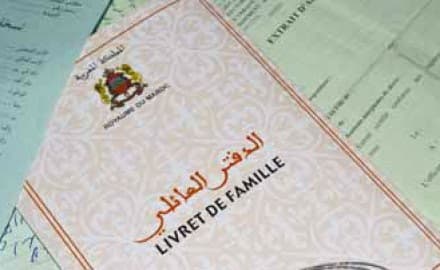
Registration of the Birth of Moroccans Born Abroad in the Moroccan Civil Status Records
A large number of children of Moroccans are born outside the Kingdom and obtain birth certificates and official documents issued by the State of birth. However, registration of the birth with foreign authorities does not exempt the person from regularizing their status in the "Moroccan civil status records" where they are subject to the provisions of Moroccan law.
The importance of this formality may not be apparent during the early years of a person's life, but it may become essential later, when seeking to obtain Moroccan documents, to marry, to regularize the status of children, or to deal with matters of succession, real property and others.
Accordingly, registration of the birth is not a mere formality, but an important step to ensure the clarity and stability of the person's civil status in Morocco.
What does Moroccan law provide regarding the civil status of Moroccans residing abroad?
The law on civil status governs this field and provides that its provisions apply mandatorily to all Moroccans.
The law has also established civil status offices outside the Kingdom at Moroccan diplomatic missions and consular posts, thereby enabling the management of civil status events concerning Moroccans residing abroad. The current system increasingly relies on the national digital system and the national civil status register, which aims to unify, update and preserve the civil status data of citizens.
Where is the birth of a Moroccan born abroad to be declared?
The law provides for the possibility of declaring civil status events, including births, before civil status offices within or outside Morocco in accordance with the information system designated for that purpose; there are also civil status offices abroad at Moroccan diplomatic missions and consular posts. However, the procedure to be followed in practice may differ depending on each person's situation, the date of birth, the country of birth, the documents available, and whether a prior declaration or registration has previously been made. Accordingly, it should not be assumed that all cases are subject to the same procedure.
What is the time limit for declaring a birth in the case of Moroccans residing abroad?
The implementing decree of Law No. 36.21 has set the general time limit for completing the declaration of a birth at thirty days, starting from the day following the occurrence of the birth. However, this time limit "is extended to one full year for the births of Moroccans residing abroad." It is preferable to carry out the registration within the statutory time limit whenever possible, since any delay in regularization may result in additional procedures being added to the file.
What happens if a year passes without the birth having been registered?
This is one of the most important points to be clarified. The expiry of the time limit does not mean that registration of the birth has become impossible, nor does it necessarily mean that court proceedings must be instituted directly. Pursuant to Article 21 of Law No. 36.21, if the declaration is not completed within the prescribed time limit, the record may be registered only upon authorization issued by the central authority or by the person to whom it has delegated that power, and the application for authorization may be submitted by any person with a legitimate interest or by the competent services. If the central authority or its delegate refuses to grant authorization for registration, the person concerned may bring an action before the competent court in accordance with the legal provisions in force.
This distinction is important, because determining the correct administrative or judicial route from the outset saves the file holder considerable time and unnecessary procedures.
Who may declare a birth?
The law has determined the persons who may declare a birth, foremost among them "the father or the mother," followed by certain relatives in the order prescribed by law. The law has also permitted an agent to act on behalf of his principal in this procedure. The Law Office of Maître Nabil Kaboury, Advocate at the Rabat Bar, handles these declarations on behalf of Moroccans residing abroad.
What documents are required to register a birth?
There is no single list that can be applied automatically to all cases, because the required documents vary according to the personal and family situation of the person concerned. Depending on the case, the file may require the birth certificate issued by the foreign State, the identity documents of the person concerned or of his parents, the Moroccan civil status documents of the father or the mother, the marriage contract where necessary, as well as the documents establishing the required family data. Certain foreign documents may also require legalization, apostille or translation procedures, depending on the State from which they were issued and the purpose for which they will be used.
Accordingly, it is preferable to examine the documents first before commencing any procedure.
What if the person was born abroad many years ago and has never been registered?
Many cases can be reviewed and regularized even many years after the birth. However, delay may make the case more complex, particularly where one of the parents has died, certain old documents cannot be found, or discrepancies appear between the data contained in Moroccan and foreign documents. Accordingly, the situation of a five-year-old person who has not been registered is not necessarily comparable to that of a person aged forty or fifty who is attempting for the first time to regularize his Moroccan civil status. As time passes, it becomes increasingly important to review the case and the documents before choosing the appropriate procedure.
What happens if there is a discrepancy in the name between Moroccan and foreign documents?
Among the recurrent problems encountered by Moroccans born abroad are discrepancies in the spelling of the first name or family name, in the order of names, in the date of birth, or in the particulars of the father and mother. A discrepancy may appear minor, but it can become an obstacle when obtaining a Moroccan document or completing a legal transaction. Accordingly, the consistency of the data should be verified before registration whenever possible, and, if a discrepancy already exists, its source and nature should be identified in order to determine whether it can be addressed administratively or requires judicial action.
What is the benefit of registering a birth in the Moroccan civil status records?
Regularizing the birth makes it possible to establish a clear civil status within the Moroccan system and helps, depending on the person's situation, to obtain civil status records and extracts and to complete procedures relating to Moroccan documents. It is also useful in the future in matters of marriage, divorce, succession, real property and the registration of children, and it limits the difficulties arising from the absence of a clear link between foreign documents and the Moroccan civil status. As for the subject of "the Moroccan nationality of a person born abroad and how to prove it," it is a separate subject that requires detailed treatment, and we will address it in a dedicated article.
Is registration at the consulate the solution in all cases?
No. Although the law has established civil status offices at Moroccan diplomatic missions and consular posts abroad, the case may not always amount to a simple consular declaration. The registration may be late, discrepancies in the data may exist, the file may require additional proof, the person may have previously been registered in a different manner, or there may be other reasons requiring a special procedure. Accordingly, the person's situation must first be determined before determining the appropriate authority and procedure.
How can the Law Office of Maître Nabil Kaboury, Advocate at the Rabat Bar, assist you?
The "Law Office of Maître Nabil Kaboury, Advocate at the Rabat Bar" assists Moroccans born abroad and their family members in proceedings relating to the Moroccan civil status records. Depending on the nature of each case, assistance includes reviewing the available documents, identifying missing documents, verifying whether a prior registration exists, examining discrepancies in names and data, determining the appropriate administrative procedure, and resorting to the courts where the legal situation so requires. If you were born outside Morocco and your birth has never been registered in the Moroccan civil status records, or if you have difficulty completing the registration, you may contact our office so that your file can be reviewed before any procedures are initiated.